
T-Shirt Quilt Pattern PDF Free: A Comprehensive Guide (Updated 05/04/2026)
Today, 05/04/2026, embarking on a t-shirt quilt journey requires understanding expectations and readily available free PDF patterns for a successful DIY project.
Understanding the Aesthetic of T-Shirt Quilts
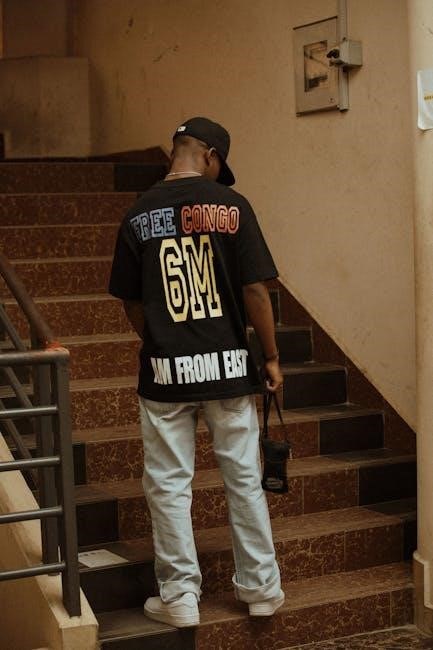
T-shirt quilts possess a unique aesthetic, diverging from traditional quilting norms. They aren’t meant to be perfect; their charm lies in showcasing memories embodied within the fabric. Expect a “weird quilt made out of clothes,” as one quilter aptly put it, rather than a flawlessly symmetrical design.
The goal isn’t to disguise the t-shirt origins but to celebrate them. Imperfections are part of the story. While harmonious blending is possible, the inherent nature of varied t-shirt designs will always result in a less conventional quilt appearance.
Accepting this aesthetic is crucial. If a pristine, traditional quilt is desired, a t-shirt quilt might not be the ideal project. Embrace the quirky, memory-laden character of a t-shirt quilt, and the finished product will be a heartfelt tribute, not a rigid attempt at perfection. It’s about the tees, man!
The Expectation vs. Reality of T-Shirt Quilts
Many envision a flawlessly crafted quilt, but the reality of t-shirt quilts often differs. People’s expectations frequently clash with the inherent challenges of working with knit fabrics and pre-printed designs. The process can be more involved than anticipated, potentially requiring more time and effort than initially planned.
Honing sewing skills is often necessary, or outsourcing to professionals becomes appealing. A weekend project can easily extend longer, especially for beginners. The finished quilt may not resemble a professionally made, traditional quilt; it will likely showcase the character of the t-shirts themselves.
Understanding this discrepancy is vital. If you’re unwilling to accept a quilt that looks like it’s “made out of clothes,” consider alternative memory preservation methods. Realistic expectations lead to greater satisfaction with the final, uniquely personal t-shirt quilt.
Why Choose a T-Shirt Quilt?

T-shirt quilts offer a deeply personal way to preserve cherished memories embedded within your clothing collection. They transform sentimental t-shirts – representing events, hobbies, or loved ones – into a functional and comforting keepsake. Unlike storing boxes of tees, a quilt provides a visually appealing and regularly used tribute.
These quilts are exceptionally meaningful gifts, particularly for graduations, birthdays, or as a remembrance of someone special. They’re a unique way to showcase a person’s interests and personality. While not always aiming for traditional quilt aesthetics, the resulting creation is undeniably special.
Choosing a t-shirt quilt is selecting a tangible connection to the past, a warm embrace of nostalgia, and a beautiful, personalized addition to your home. It’s a celebration of memories stitched together with love and care.

Finding Free T-Shirt Quilt Patterns (PDF)
Numerous online resources offer free T-shirt quilt patterns in PDF format, enabling DIY enthusiasts to create memory quilts with accessible instructions and guidance.
Popular Online Resources for Free Patterns
The Jolly Jabber blog stands out as a fantastic starting point, providing step-by-step instructions alongside a comprehensive list of required supplies for crafting your own personalized t-shirt quilt. This resource is ideal for beginners seeking a guided approach to the project.
Etsy, while known for selling patterns, also hosts numerous shops offering free downloadable PDF patterns for t-shirt quilts. A careful search using relevant keywords will reveal a wealth of options, ranging from simple designs to more intricate layouts. Remember to always check the licensing terms before using any free pattern.
Pinterest serves as a visual discovery engine, brimming with links to various free t-shirt quilt patterns hosted on different blogs and websites. It’s a great place to gather inspiration and find patterns that align with your aesthetic preferences. Be sure to verify the source and download the PDF directly from the original website.
Additionally, exploring quilting forums and communities online can often lead to shared free patterns and helpful tips from experienced quilters. These platforms provide a collaborative environment for learning and problem-solving.
Specific Pattern Examples Available for Download
A readily available option is a Quilt Pattern for Memory quilts, specifically designed for t-shirts, onesies, and sport shirts. This PDF download provides instructions for creating a twin-size quilt using a 12-block layout, ideal for beginners with some basic sewing skills. It’s a digital pattern, offering convenience and immediate access.
While specific free patterns change frequently, searching on platforms like Etsy often reveals temporary freebies. Look for patterns focusing on simple block construction, as these are easier to adapt and customize. Many designers offer introductory PDFs to showcase their style.
Blogs dedicated to quilting frequently release seasonal or promotional free patterns. Regularly checking sites like The Jolly Jabber or similar quilting resources can uncover new options. Remember to confirm the pattern includes clear cutting and sewing instructions.
Keep an eye out for patterns designed around specific block sizes, like 12×12 inches, as these are commonly used for t-shirt quilts and simplify fabric calculations.
Evaluating the Quality of Free PDF Patterns
When sourcing free t-shirt quilt PDF patterns, critical evaluation is essential. Begin by assessing clarity: are the instructions easy to understand, with diagrams or illustrations? A good pattern will detail fabric requirements, cutting dimensions, and seam allowances precisely.
Check for completeness. Does the pattern include all necessary components – block layouts, assembly instructions, and finishing guidance? Incomplete patterns can lead to frustration and wasted materials. Look for patterns that specify block sizes and layout options.
Consider the pattern’s complexity. If you’re a beginner, opt for simpler designs. Avoid patterns with intricate seams or techniques like L seams or puzzle quilts initially.
Read reviews or comments, if available, to gauge other quilters’ experiences with the pattern. Finally, verify the pattern’s accuracy by test-cutting a sample block before committing to the entire quilt.
Preparing Your T-Shirts for Quilting
Careful preparation is key; begin by measuring the design areas on each t-shirt, then stabilize the fabric to prevent stretching during the quilting process.
Measuring and Cutting T-Shirt Designs
Accurate measurement is paramount when transforming cherished t-shirts into a lasting quilt. Begin by laying each shirt flat and carefully identifying the design you wish to preserve. Don’t simply assume a standard size; design areas vary significantly. Use a ruler to precisely measure the height and width of each graphic, noting these dimensions for consistent block sizing later on.
When cutting, consider adding a consistent seam allowance – typically ¼ inch – around each design. This provides room for sewing and prevents the design from being cut off during the quilting process. A rotary cutter, mat, and acrylic ruler are invaluable tools for achieving clean, straight cuts. Remember, the goal isn’t perfection, but consistency. Embrace the inherent “weirdness” of a t-shirt quilt; it’s part of its charm!

Prioritize preserving the integrity of the design. If a design extends close to the shirt’s edge, consider carefully how the cut will impact its appearance in the finished quilt.
Stabilizing T-Shirt Fabric
T-shirt fabric, being knit, stretches easily, posing a challenge for quilting. Stabilizing the fabric is crucial to prevent distortion during cutting, sewing, and the quilt’s lifespan. Several methods exist, each with pros and cons. Lightweight fusible interfacing is a popular choice, applied to the wrong side of each t-shirt block before cutting. This adds structure without significantly altering the fabric’s feel.
Alternatively, consider using a spray starch to temporarily stiffen the fabric. However, this effect diminishes with washing, so it’s best suited for quilts intended for display rather than frequent use. Some quilters prefer to use a tear-away stabilizer, which provides support during construction and is removed afterward.
The key is to choose a stabilizer compatible with your chosen quilting techniques and desired quilt longevity. Experiment with scraps to determine the best option for your specific t-shirt materials.
Consistent Block Sizes: A Key to Success
Achieving uniform block sizes is paramount for a visually appealing t-shirt quilt. Variations in block dimensions create challenges during assembly, leading to puckering or uneven seams. Begin by carefully measuring the design area on each t-shirt, accounting for any desired border around the image. A common size is 12.5” x 17”, but adjust based on your shirt designs.
Precise cutting is essential. Utilize a rotary cutter, mat, and acrylic ruler for accuracy. Templates can be incredibly helpful, ensuring each block is identical. Remember to account for seam allowances when cutting.
Don’t strive for perfection, as t-shirt quilts inherently have a relaxed aesthetic. However, minimizing size discrepancies will significantly improve the final product’s overall appearance and ease of construction.

Quilt Construction Techniques
Simple sewing methods are best for t-shirt quilts, avoiding complex seams like L seams or puzzle quilts, focusing on a straightforward 12-block layout for ease.
Basic Block Layouts (12-Block Quilt)
A 12-block quilt is an excellent starting point for t-shirt quilt construction, offering a manageable size and straightforward layout. This configuration allows for a good representation of your t-shirt collection without becoming overwhelmingly large or complex. Many free PDF patterns specifically cater to this size, providing detailed instructions for cutting and assembling the blocks.
Consider a simple grid arrangement – four blocks across and three blocks down – for a classic look. This layout is particularly forgiving for varying t-shirt design sizes. Remember, the goal isn’t necessarily a perfectly symmetrical, traditionally “quilted” aesthetic; it’s about showcasing the memories embedded in the tees.
When arranging your blocks, play with the visual flow. Alternate colors and designs to create a balanced composition. Don’t be afraid to embrace the inherent “weirdness” of a t-shirt quilt; it’s part of its charm! A 12-block quilt is a fantastic way to begin, building confidence before tackling larger, more intricate designs.
Simple Sewing Methods for T-Shirt Quilts
For beginners, keeping sewing methods simple is crucial for a successful t-shirt quilt. Straight seams are your best friend! Avoid complex techniques like L seams or puzzle quilts, as they add unnecessary difficulty. A standard ¼ inch seam allowance is recommended for consistent block construction.
When joining blocks, focus on accuracy. Press seams open or to one side – consistency is key. Many free PDF patterns emphasize a straightforward approach, guiding you through basic piecing techniques. Don’t strive for perfection; a slightly imperfect t-shirt quilt adds to its handmade charm.
Remember, the fabric is knit, so a walking foot on your sewing machine can be incredibly helpful to prevent stretching. Take your time, and don’t be afraid to re-sew if needed. Prioritize a clean finish over elaborate stitching. Embrace the process and enjoy creating a unique keepsake!
Avoiding Complex Seams (L Seams, Puzzle Quilts)
T-shirt quilts are best approached with simplicity in mind, especially regarding seam construction. Techniques like L seams and puzzle quilts, while visually interesting, significantly increase the project’s difficulty. These methods demand precise cutting and sewing, potentially leading to frustration, particularly for beginners utilizing free PDF patterns.
The inherent stretch in t-shirt fabric makes complex seams even more challenging to manage. Straight seams offer stability and are far more forgiving. Many quilters, like those sharing experiences online, actively avoid these advanced techniques, prioritizing a manageable and enjoyable process.
Focus on creating a quilt that showcases the t-shirts themselves, rather than intricate piecing. A straightforward block layout with simple seams will result in a beautiful and meaningful quilt, without the added stress of complicated construction. Embrace the “weird quilt made out of clothes” aesthetic!
Materials and Supplies Needed
Essential supplies include a collection of t-shirts, backing fabric, batting, a rotary cutter, quilting ruler, and sewing machine for your free PDF pattern project.
T-Shirts (Quantity and Condition)
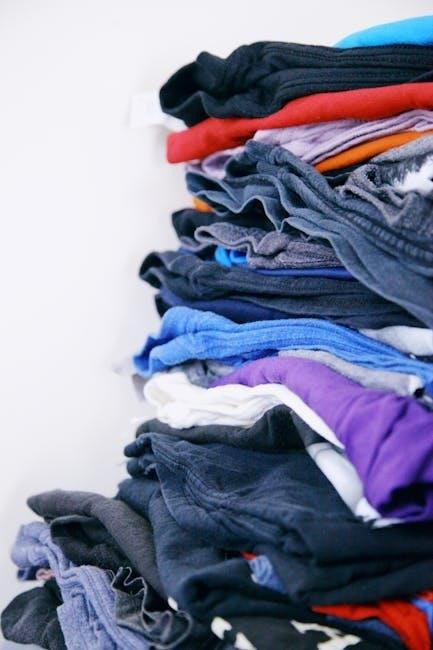
Determining the number of t-shirts needed depends on the desired quilt size; a 12-block quilt, as suggested in some free PDF patterns, often requires around 30 shirts. However, consider the size of the designs on each shirt – larger designs necessitate fewer shirts overall.
The condition of the t-shirts is crucial. While the goal is to preserve memories, heavily worn or damaged shirts might not hold up well during the quilting process. Look for shirts with vibrant designs and relatively stable fabric. Pre-washing the shirts is recommended to remove any sizing and prevent shrinkage after the quilt is completed.
Variety in t-shirt weight and material can present challenges, so try to select shirts of similar composition for a more consistent result. Don’t be afraid to embrace the “weird quilt made out of clothes” aesthetic, but acknowledging fabric differences helps manage expectations. Remember, the quilt’s purpose is to showcase those cherished tees!
Backing Fabric and Batting
Choosing the right backing fabric and batting is essential for a comfortable and durable t-shirt quilt. The backing fabric should be a sturdy, high-quality cotton or cotton blend that complements the t-shirt designs. Consider a wider backing fabric to avoid seams, simplifying the finishing process.
Batting selection impacts the quilt’s warmth and drape. Cotton batting is a popular choice for its breathability and ease of quilting, while polyester batting offers more loft and is often more affordable. A low-loft batting is generally recommended for t-shirt quilts to prevent the designs from being obscured.
Angela Walters’ pattern suggests utilizing quilting cotton alongside the t-shirts, hinting at the importance of harmonious fabric choices. Ultimately, the backing and batting should enhance, not detract from, the showcased t-shirt memories.
Essential Sewing Tools
Assembling a t-shirt quilt requires specific sewing tools to ensure precision and efficiency. A rotary cutter, cutting mat, and acrylic ruler are crucial for accurately cutting the t-shirt designs and fabric pieces. Invest in a good quality sewing machine capable of handling multiple layers of fabric, as t-shirt material can be stretchy.
Pins or clips are vital for holding fabric layers together before sewing. A seam ripper is an inevitable companion for correcting any mistakes. Don’t forget fabric marking tools – pens or pencils – to transfer pattern markings.
Basic sewing skills are needed to follow even simple PDF patterns, as noted in available quilt instructions. Having these tools readily available will streamline the process and contribute to a beautifully finished t-shirt quilt, showcasing cherished memories.
Finishing Your T-Shirt Quilt
Binding techniques secure the edges, while quilting options—simple or elaborate—add texture. Professional quilting services offer a polished look for your memory quilt!
Binding Techniques
Binding is the crucial final step, encapsulating the raw edges of your t-shirt quilt and providing a neat, durable finish. Several methods exist, each offering a unique aesthetic. A straight-grain binding, cut on the lengthwise grain of the fabric, is a common and relatively easy choice for beginners, offering stability and a clean look.
Alternatively, a bias binding, cut on the diagonal, provides more flexibility, ideal for quilts with curved edges or those requiring a softer drape. Machine binding is faster, while hand binding offers a more refined, heirloom-quality finish. Consider the width of your binding – a wider binding creates a bolder frame, while a narrower one is more subtle.
Properly mitering corners is essential for a professional appearance. Numerous online tutorials demonstrate various binding techniques, ensuring a secure and visually appealing completion to your cherished t-shirt quilt project. Remember to press the binding as you go for crisp, clean lines!
Quilting Options (Simple vs. Elaborate)
Quilting secures the layers of your t-shirt quilt – top, batting, and backing – and adds texture and visual interest. Simple quilting, like straight-line stitching across the blocks, is beginner-friendly and effectively holds the quilt together. A grid pattern, following the block layout, is a classic choice;
For a more elaborate look, consider free-motion quilting, allowing for intricate designs and personalized motifs. However, this requires practice and a steady hand. Echo quilting, tracing around the t-shirt designs, can highlight the individual blocks. Remember, the quilting style should complement, not overwhelm, the t-shirt graphics.
Professional quilting services offer a wide range of designs if you prefer not to quilt it yourself. The density of quilting impacts warmth and drape; more quilting equals a warmer, more structured quilt. Choose a style that reflects your skill level and desired aesthetic!
Considering Professional Quilting Services
Professional quilting services offer a valuable option if you’re hesitant about quilting your t-shirt quilt yourself, or desire a complex design beyond your skill level. Longarm quilters possess specialized equipment and expertise to create stunning, intricate patterns. This is particularly beneficial for larger quilts, like those made with 30+ shirts.
Costs vary depending on the quilting design’s complexity, the quilter’s experience, and the quilt’s size. Discuss your vision and budget upfront to avoid surprises. Many quilters offer a menu of pre-designed patterns, or can create a custom design.
Outsourcing quilting frees you from a potentially challenging step, ensuring a beautifully finished quilt. It’s a worthwhile investment if you prioritize a polished, professional look and want to enjoy the quilt without the stress of advanced techniques.